Sunita still remembers the day she bought her first proper gold bangle. Not the lightweight kind you pick up quickly, but the “this is for life” kind. The jeweler weighed it carefully, showed her the purity, and then added a line item she hadn’t really thought about.
“Madam, making charges alag se.”
That moment is familiar to many of us. When we buy gold jewelry, we don’t pay only for gold. We pay for the work that turns gold into something wearable – design, crafting, finishing, sometimes even brand premium. Those extra costs are called making charges on gold (also referred to as gold ornament making charges).
And they matter a lot when you’re deciding what to do with your jewelry in a tight moment:
Do you sell it? Or do you take a gold loan?
This article is about that exact choice, and why a gold loan often helps you protect the “extra value” you already paid for.
What are making charges on gold?
In simple terms, making charges on gold are the labor and craftsmanship costs the jeweler charges to make jewelry from raw gold.
Depending on the design, these charges can be:
- a percentage of the gold price, or
- a fixed amount per gram, or
- a flat charge for a piece
Simple chain? Lower making charges.
Heavy bridal set? Higher making charges.
Handcrafted or designer work? Higher still.
This is why two bangles of the same weight can have very different final prices.
The key point: making charges are real money you pay, but you don’t always recover it when you sell.
The problem with selling gold: you may lose what you already paid
Start your own business with Manipal Gold Loan. Apply now and make your dream come true
Amit, a small business owner, once put it bluntly:
“I bought this chain at a premium. If I sell today, I’ll get gold rate minus cuts. It feels like I’m paying twice.”
That’s not an exaggeration. When you sell gold jewelry, buyers usually focus on:
- net gold weight (after stones/non-gold parts)
- purity
- prevailing rate
- deductions for melting/refining
In most cases, making charges on gold are not paid back fully when you sell. Sometimes you get a small portion. Often you don’t.
So, if you sell the jewelry, you bought recently, you may lose:
- making charges you paid earlier
- design premium
- emotional value and future usefulness
That’s where a gold loan becomes an option worth considering.
How a gold loan helps you “save” making charges
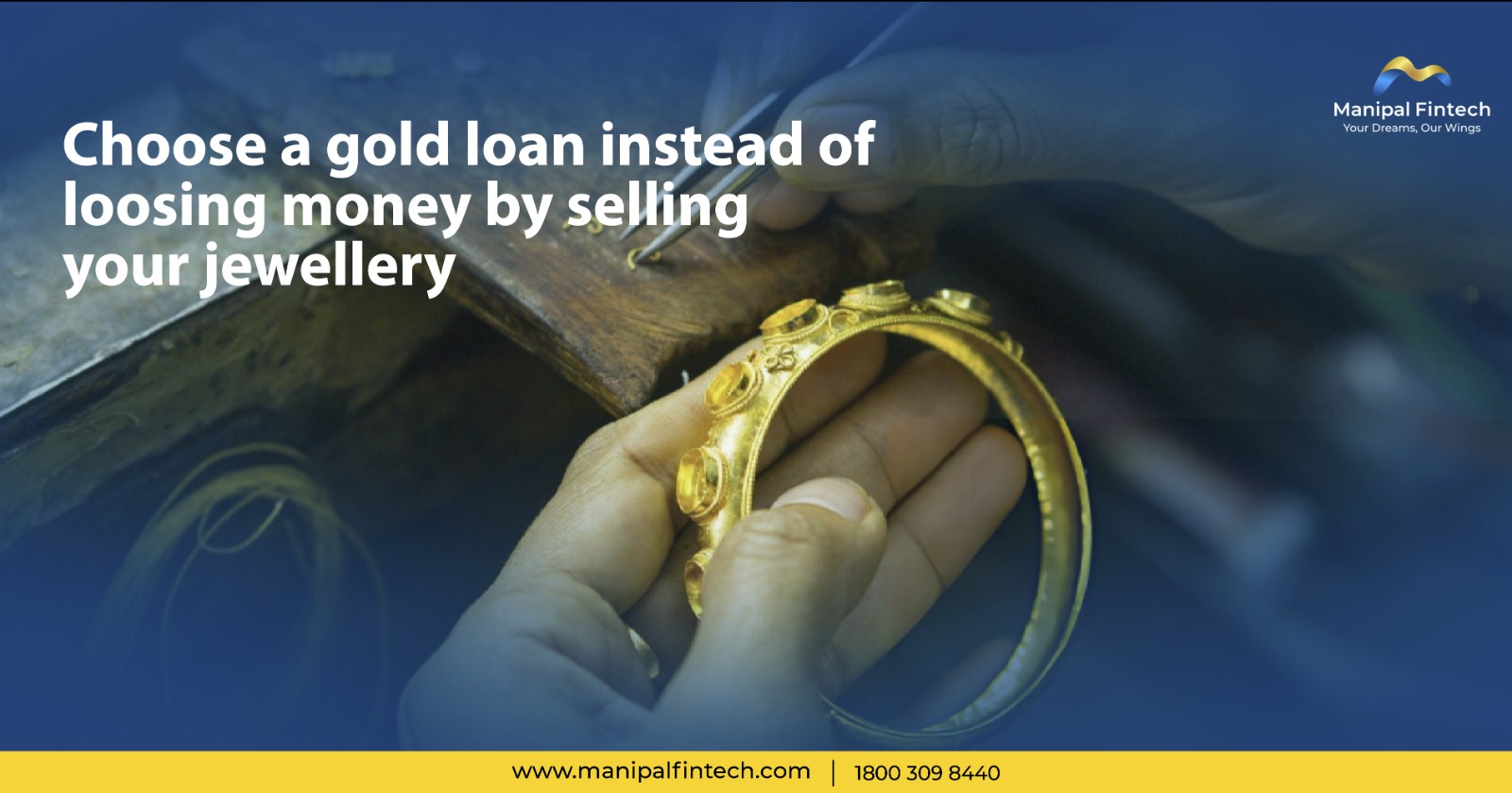
A gold loan allows you to unlock money from your jewelry without selling it. That means you keep ownership of the ornament, and the money you spent on craftsmanship is not “wasted” through a sale.
You’re essentially using your jewelry as temporary security, and once you repay, you get it back.
This is why, for many families, a gold loan feels like a practical middle path:
- You get funds quickly
- You avoid permanent loss of jewelry
- You avoid losing the paid making charges through a distress sale
In other words, it’s not that the loan gives you back making charges in cash.
It helps you avoid losing them.
Gold loan eligibility: what typically matters
People often assume they need a high credit score. Gold loans are different because they are backed by the gold itself.
Gold loan eligibility usually depends on:
- the purity of gold (commonly 18K–24K accepted, varies by lender)
- net weight after assessment
- valid ID/address documents (KYC)
- lender policy on ornament type
Eligibility is primarily linked to the gold’s assessed value and policy limits.
Gold loan benefits and advantages of gold loan (why people choose it)
In real life, people choose gold loans for very practical reasons. Common gold loan benefits include:
- Faster access to funds compared to many unsecured loans
- Shorter tenures and flexible repayment options
- Ability to retain ownership of jewelry
- Useful for seasonal needs (fees, medical, business cycles, farming needs)
This is why, when cash needs are temporary, the advantages of gold loan often outweigh selling.
Gold loan tax benefits: do you get any?
This comes up a lot, so here’s the honest answer.
Gold loan tax benefits depend on what you use the money for and how you file taxes. Generally:
- If the loan is used for business purposes, the interest may be considered as an expense (subject to applicable tax rules and documentation).
- For personal use, interest is usually not tax-deductible in the same way.
Because tax rules vary by individual situation, it’s best to check with a tax professional for your exact case.
Gold loan or selling gold: which is better?
A simple way to decide:
Choose a gold loan if:
- you need funds temporarily
- you want the jewelry back
- you want to avoid losing making charges and sentimental value
- gold prices are not favorable for selling
Consider selling gold if:
- you are sure you won’t need the ornament again
- you want to permanently reduce gold holdings
- you are comfortable accepting deductions and value loss
- you want to avoid interest costs entirely
For many Indian households, the emotional and financial reality is this: jewelry is not just an asset. It is security. Selling is final. A gold loan is reversible.
Closing thought
Making charges are the hidden cost of gold jewelry – the part you pay quietly and remember only when life forces a financial decision.
A gold loan doesn’t erase those charges.
But it can help you avoid losing them by selling in a hurry.
And sometimes, that is the smartest kind of saving:
keeping what you already paid for, while still getting the support you need.
If you own gold assets and are considering a loan, choosing doorstep services can provide you with a seamless and efficient borrowing experience.
Apply for a gold loan 24/7 on www.manipalfintech.com, or call at 18003098440