Before approving a gold loan, lenders use reliable and time-tested gold testing methods to carefully assess the purity, authenticity, and value of the gold jewellery you are pledging to get a loan. This thoughtful evaluation helps ensure that the loan amount offered reflects the quality of the gold. Since even small differences in purity can influence valuation, the process is designed to be detailed and fair. By understanding this verification process when you approach a bank or NBFC for a gold loan, you can enjoy a smoother, clearer, and more reassuring borrowing experience.
This article walks you through which gold testing methods banks and NBFCs use to check gold purity, what happens step-by-step, and the common methods used by lenders to verify gold authenticity.
Before Testing: Eligible Gold Jewellery
Most banks and NBFCs accept gold jewellery (ornaments) as collateral. The first step in the process is typically an acceptance check rather than a purity test.
During this stage, the gold appraiser reviews the jewellery type (chain, bangles, earrings, and similar items), condition and eligibility as per internal policy, and stones or decorative elements, since the loan is calculated against gold content rather than decorative components.
This matters because valuation depends on net gold weight after accounting for stones and other elements.
The Gold Loan Verification Process: Your Experience at the Counter
At banks and NBFCs, the gold loan verification process is designed to be structured, transparent, and customer friendly. It begins with a simple customer verification step, including KYC, the application form, and an understanding of your loan requirement.
This is followed by a careful inspection and sorting of the jewellery, along with precise weight measurement to determine both gross and net weight. The purity of the gold is then assessed using trusted gold testing methods. Based on the purity, weight, and the lender’s rate reference, the valuation is calculated.
Once this is complete, customers receive a clear loan offer outlining the eligible amount, interest rate, tenure, and flexible repayment options. The process concludes with secure packing, sealing, and safe storage of the jewellery, ensuring complete peace of mind throughout the loan journey.
Lenders often use multiple checks together rather than relying on a single test, similar to verifying identity with ID, OTP, and signature combined.
1. Visual Gold Testing Method (The First Step)
Before advanced tools or chemical testing are used, the process begins with a trained and experienced eye. The gold evaluator carefully observes hallmark markings (where present), colour consistency, surface finish, and key areas such as joints, clasps, and solder points, places where metal composition may differ. This step helps set the foundation for a smooth and accurate evaluation process.
This helps determine which pieces require deeper testing. While hallmarks provide useful information, lenders still conduct independent verification as part of the loan transaction process.
2. Weight Measurement (Gross vs Net)
Weight measurement plays an important role in determining the loan value. During this step, the jewellery is carefully weighed, and components such as stones, beads, or decorative elements are identified to arrive at the net gold weight.
Along with purity, net weight is a key factor in gold evaluation. Together, these elements help ensure that the loan value is calculated accurately and transparently, creating a fair and well-defined assessment for customers.
3. Touchstone Gold Testing (Fast and Widely Used)
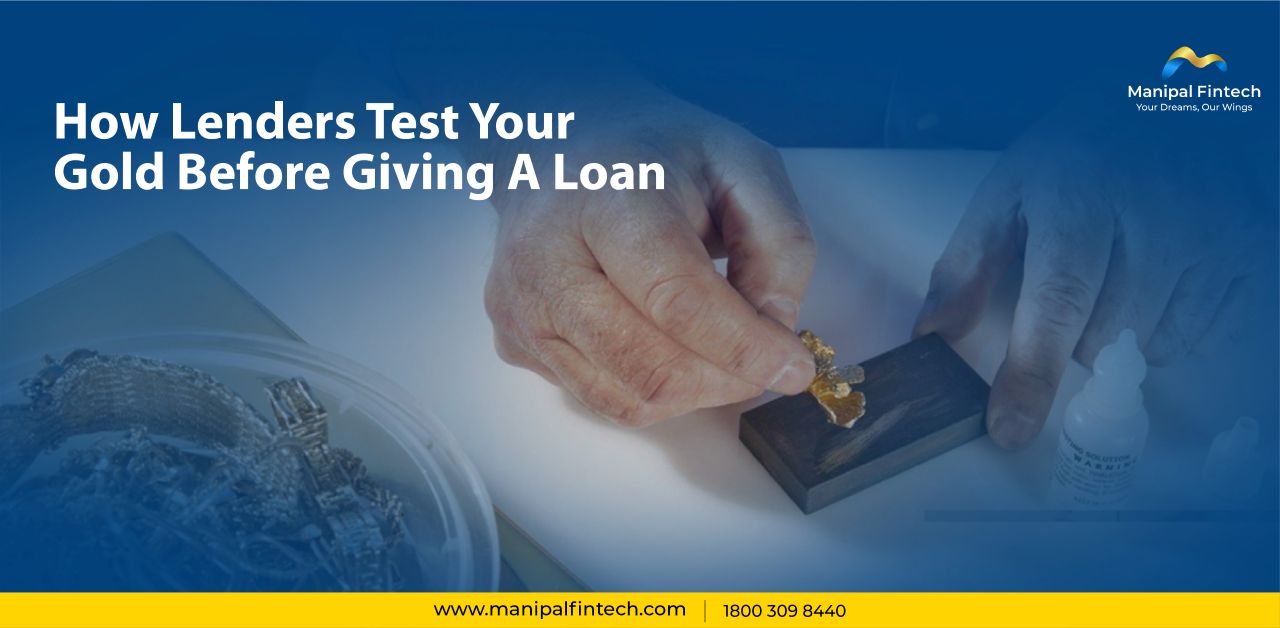
Touchstone testing is one of the most commonly used methods for assessing gold purity. In this process, the evaluator gently rubs the gold on a black touchstone to create a streak, after which testing acids of varying strengths are applied. The reaction helps indicate the purity level of the gold.
This method is popular because it is quick and cost-effective. It is often used alongside other testing methods to provide added clarity.
4. Acid Test (Related to Touchstone, More Direct)
Acid testing is another method used by some lenders as part of the gold purity assessment, particularly for understanding surface composition. Different karat levels respond in distinct ways to testing acids, allowing evaluators to gain useful insights into purity.
Since this method involves controlled use of chemicals, it is carried out carefully by trained professionals following established procedures. This ensures the process remains safe, precise, and aligned with standard evaluation practices.
5. Electronic Gold Tester (Commonly used in Branches)
Many banks and NBFCs now use electronic karat meters to assess gold purity. Electronic testers work by analysing conductivity and resistance properties to estimate purity. In branch settings, this method is valued for being quick and consistent, offering objective readings that support accurate evaluation.
Electronic testing is a commonly used approach when customers want to understand how lenders assess gold before offering a loan.
6. XRF Machine Test (High Accuracy, Available at Select Branches)
In larger branches or specialised setups, XRF (X-Ray Fluorescence) testing may be available. This is one of the most accurate methods used by lenders to check gold authenticity, because it measures metal composition without cutting or melting the jewellery.
It provides a detailed breakdown of gold percentage and other metals present (like copper, silver, or nickel). While availability varies by branch due to equipment cost, when present, it strengthens the gold purity test for gold loan approval considerably.
7. Density / Specific Gravity Test (Scientific, Reliable)
The density, or specific gravity, test is another scientific approach used in gold evaluation. Since gold has a known density, measuring this property helps assess the composition of the jewellery in a structured and accurate way.
This method supports a deeper understanding of the item’s overall makeup and complements other testing techniques used during verification. While availability may vary by branch, it continues to be a valuable part of the gold testing toolkit.
What the Verification Process Aims to Establish
When lenders follow the gold loan verification process, it helps create clarity and confidence for everyone involved. The process supports genuine collateral assessment and ensures borrowers receive a valuation that accurately reflects their jewellery.
The process helps confirm surface and core composition, solid versus hollow construction, karat marking accuracy, and consistency across solder areas and joints.
Start your own business with Manipal Gold Loan. Apply now and make your dream come true
Tips for a Smooth Verification Experience
For faster approval and fair valuation, borrowers may find it helpful to clean jewellery lightly beforehand, carry the purchase invoice if available, expect net weight adjustment if stones are present, and ask which purity method is being used, whether touchstone, electronic, or XRF.
Understanding the process helps borrowers feel more comfortable and informed throughout.
The Bottom Line
Gold testing methods used by banks and NBFCs before approving a gold loan include a mix of visual inspection, weight assessment, touchstone and acid tests, electronic testers, and sometimes advanced XRF or density check, depending on branch and lender protocols.
The goal is to confirm authenticity and purity so the loan value is fair and consistent. Understanding how lenders assess gold purity adds transparency to the process and helps create a more comfortable and confident experience for borrowers.
If you own gold assets and are considering a loan, choosing doorstep services can provide you with a seamless and efficient borrowing experience.
Apply for a gold loan 24/7 on www.manipalfintech.com, or call at 18003098440